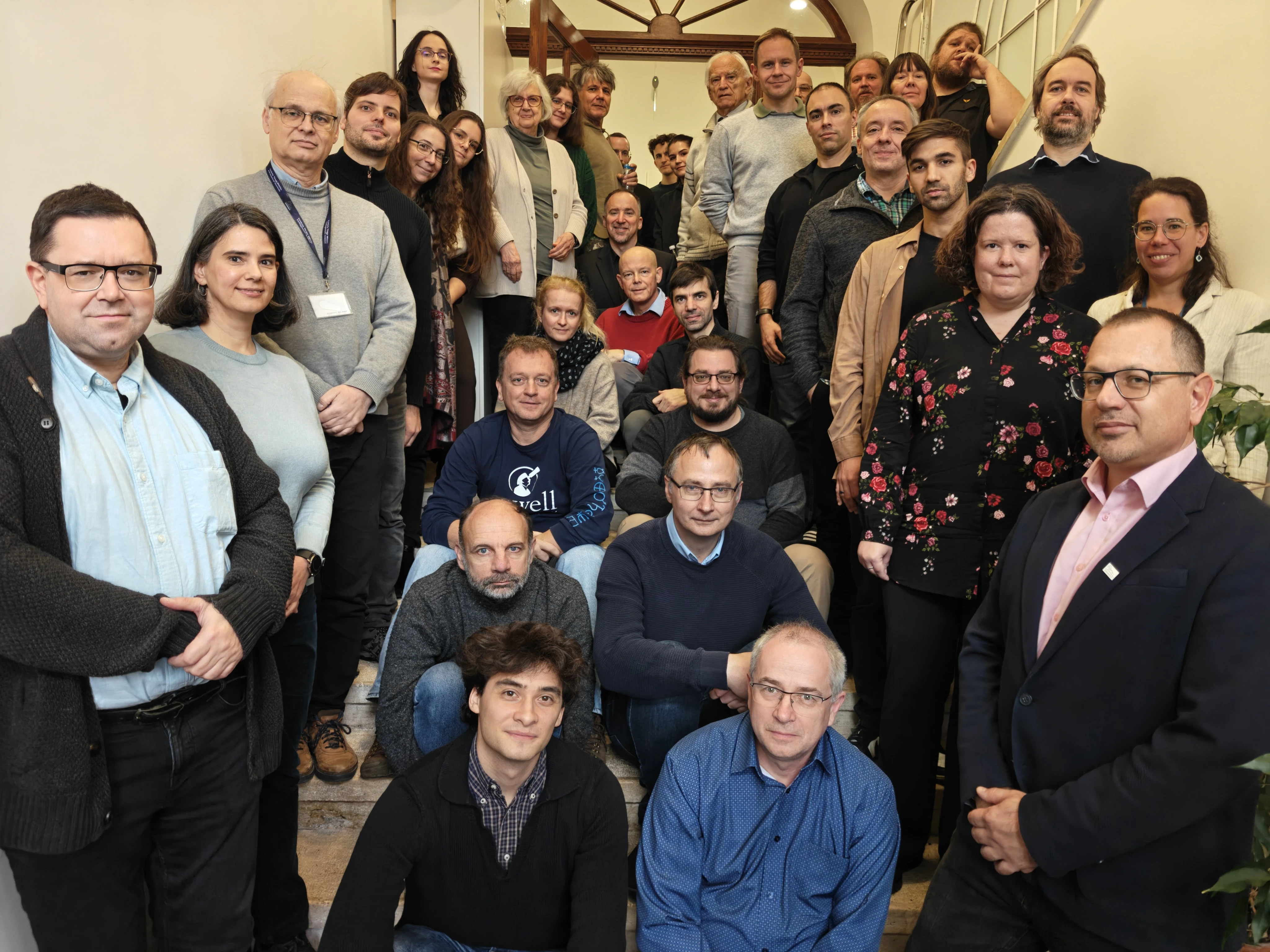
Group photo featuring most of the participants
The instrument, which is primarily used for studying variable stars, can be used with two different CCD cameras and a spectrograph, making it suitable for recording spectra in addition to measuring brightness variations. The telescope was installed in 1975 and it is now also featured on the Konkoly Institute logo. In December 2025, astronomers celebrated the 50th anniversary of this highly successful instrument with a one-day conference.
The conference was divided into three main sections, in which researchers using the telescope presented the most important results obtained from measurements with the RCC telescope, as well as their personal experiences with the instrument. 50 people attended the meeting, including online participants.
In the first section, astronomers who were present during the construction of the telescope and were the first to make observations reported on their experiences: the construction of the telescope and its associated building, the first observations, communicating via telex, drawing light curves on graph paper, writing observation logs by hand, and spending nights in the freezing cold. Using the earliest measurement data from the telescope, numerous papers were written on the topics of magnetically active stars, small bodies in the Solar System, and variable stars, which were highly regarded internationally. Lajos Balázs, Katalin Oláh, Imre Tóth, József Benkő, Mária Kun, and Tamás Borkovits gave presentations in this section.
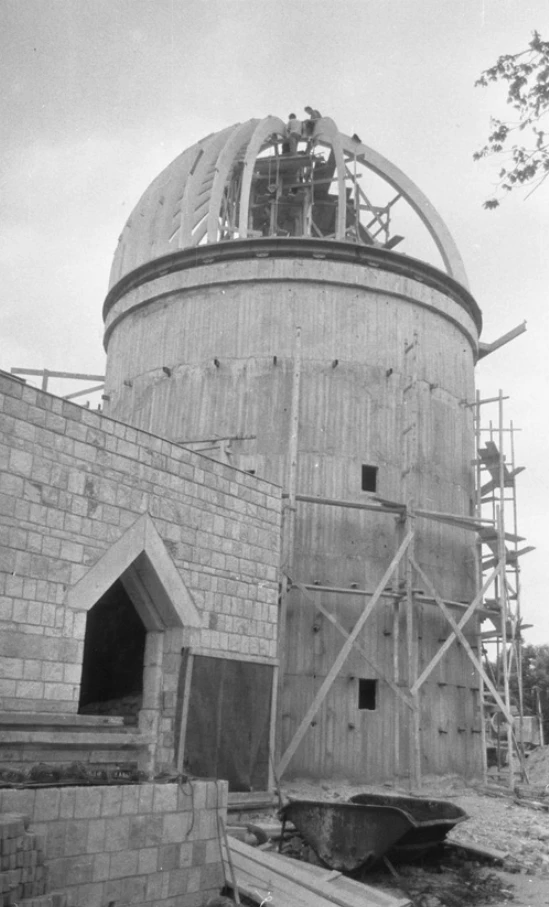
Building the dome of the RCC telescope

The dome of the RCC telescope in the present days
After the lunch break, the "second generation" telescope users presented their talks. Interesting stories were told about the development of the telescope's electronics and the renovation of the instrument 10 years ago, as well as measurements of young eruptive stars, pulsating white dwarfs, double Cepheids, and small bodies in the Solar System, and also kitchen adventures. The speakers included András Pál, György Mező, Ágnes Kóspál, Krisztián Vida, Zsófia Sódorné Bognár, Borbála Cseh, and Róbert Szakáts.
The third section of the conference included talks by young researchers: Levente Kriskovics, Anna Görgei, Réka Könyves-Tóth, Bálint Seli, Petra Sági, and Blanka Schmercz. First, Zoltán Kuli, the technical deputy director, spoke about the present and future of the RCC telescope, followed by presentations about the latest scientific results. These include the analysis of spectroscopic data, the study of spotted stars, and the high-cadence photometry of stellar flares. The section also focused on personal experiences and interesting stories related to the telescope and the observatory, as well as the role of the RCC telescope in education.
During the meeting, we heard how the telescope, equipped with increasingly modern detectors, has contributed to a better understanding of asteroids, white dwarfs, binary stars, pulsating variables, young and magnetically active stars. We hope that the RCC telescope will continue to assist Hungarian astronomers in their work for a long time to come!