News
Szűrő
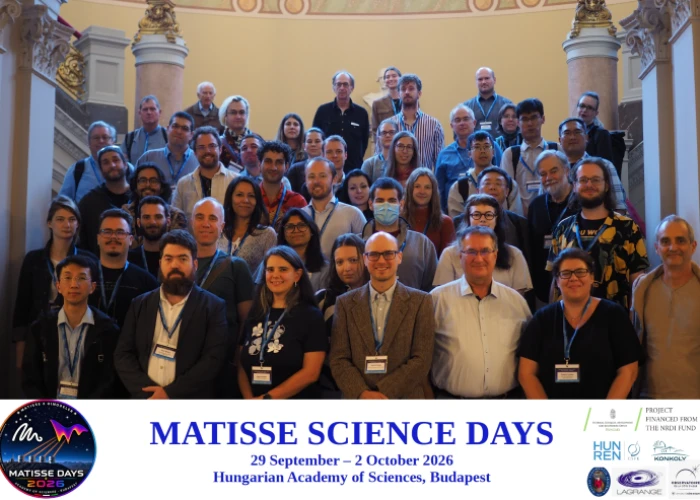
Konkoly Observatory Hosted Second MATISSE Science Days in Budapest
2026. october 09.
100 astronomers, engineers, and students from 18 countries convened to review the latest high-angular resolution results from ESO's mid-infrared interferometric instrument
More
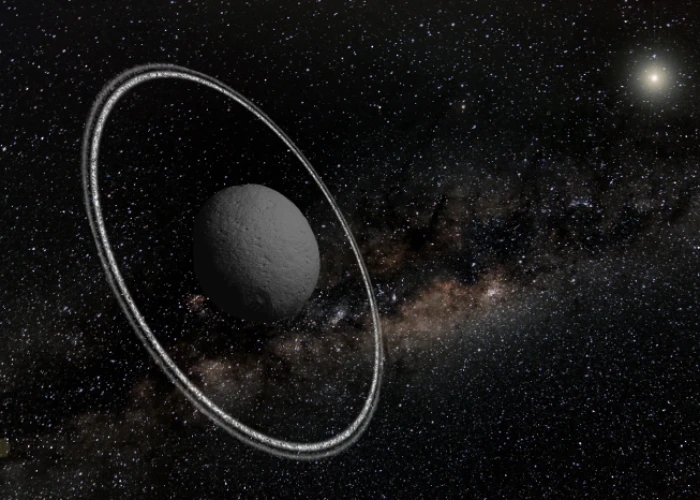
James Webb Space Telescope discovers that Chariklo’s invisible rings are changing
2026. september 09.
As part of an international team led by the Institute of Astrophysics of Andalusia (IAA-CSIC), Hungarian astronomers demonstrate for the first time that the two rings of this small Solar System body are changing in opposite directions.
More
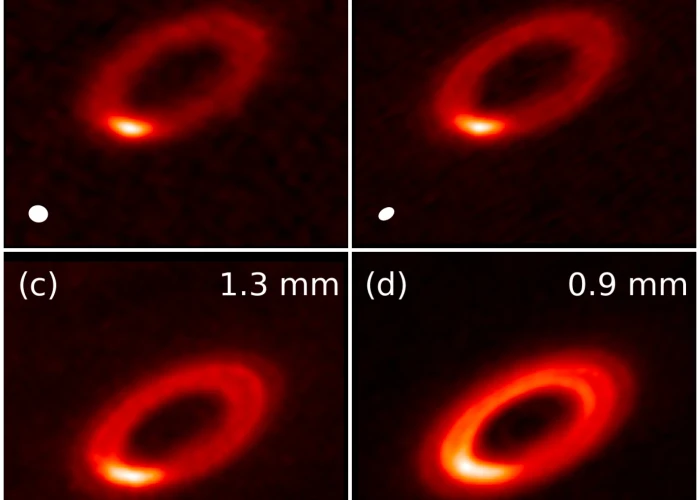
Inside the Cosmic Dust Trap: ALMA Unveils Secrets of Potential Planet Nursery around Young Star
2026. august 18.
An international team of Chinese and Hungarian astronomers has unveiled detailed new observations of a protoplanetary disk around the star HD 34282.
More
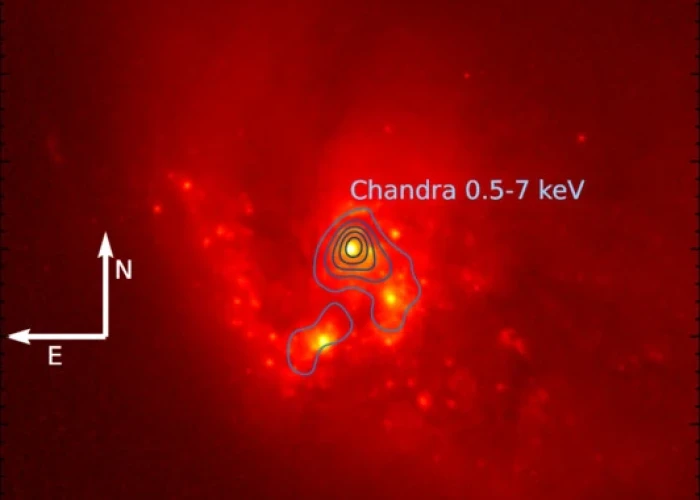
A glimpse into a system formed by the collision of three galaxies
2026. july 20.
Archival observations from international radio telescope arrays have revealed compelling evidence for a hidden black hole in the luminous infrared galaxy UGC 2369S.
More
Radio outburst of a nearby black hole could help us better understand the early Universe
2026. july 07.
A supermassive black hole at the centre of an active galactic nucleus in our cosmic “neighborhood” is growing at an exceptionally rapid rate while producing a radio outburst unlike anything previously observed.
More
Euclid Space Telescope Shatters Cosmic Record: Discovery of the Two Most Distant Quasars Ever Observed
2026. july 06.
Today, the Euclid Consortium announces the discovery of 31 new quasars at redshifts between 6.6 and 7.8, including the two most distant quasars ever observed.
More
Action! NSF–DOE Vera C. Rubin Observatory Begins Capturing the Greatest Cosmic Movie Ever Made
2026. june 30.
The 10-year Legacy Survey of Space and Time has officially started, marking the beginning of a new era in astronomy and astrophysics
More
Quasars as cosmic rulers
2026. june 29.
A classical cosmological test has been revisited using a much larger dataset to probe the geometry of the Universe.
More
News breakdown
- Science
- Archive
- Public Outreach
- Research News
- Organisational News
- Proposal
- Event
- Conferences and events
- Celestial Event
- Press Release
- All news