Research News
Szűrő

Astronomers uncover the engine behind the most powerful stellar flares in the Kepler field
2026. october 25.
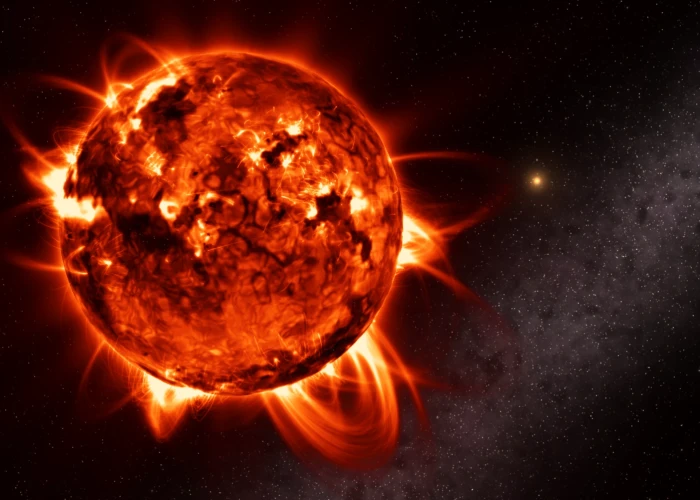
A new study led by researchers at the HUN-REN Research Centre for Astronomy and Earth Sciences (HUN-REN CSFK) has revealed what makes a distant red giant star the most explosively active in the entire Kepler field -
More
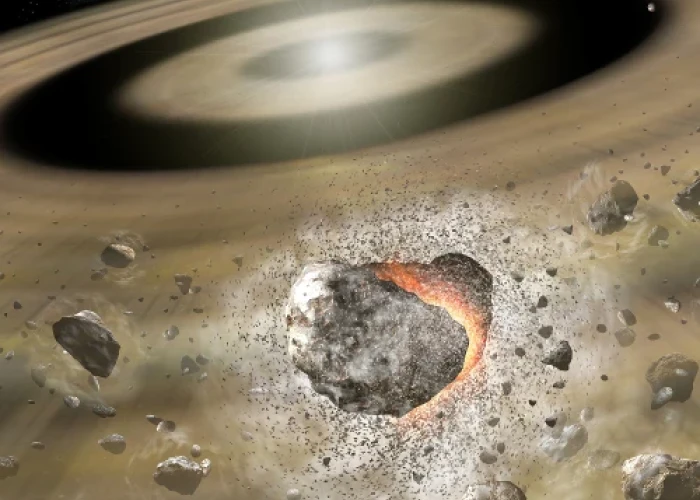
Inside the Cosmic Dust Trap: ALMA Unveils Secrets of Potential Planet Nursery around Young Star
2026. august 18.
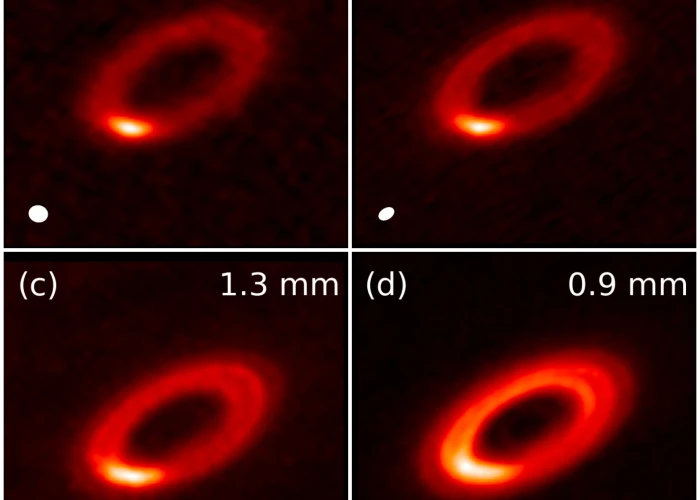
An international team of Chinese and Hungarian astronomers has unveiled detailed new observations of a protoplanetary disk around the star HD 34282.
More
A glimpse into a system formed by the collision of three galaxies
2026. july 20.
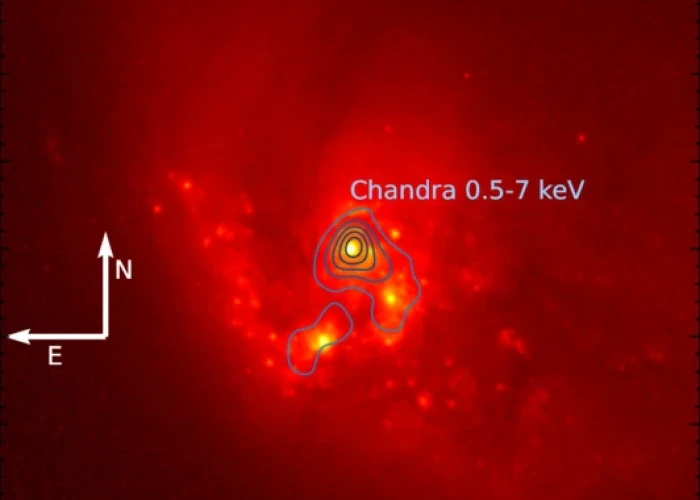
Archival observations from international radio telescope arrays have revealed compelling evidence for a hidden black hole in the luminous infrared galaxy UGC 2369S.
More
Radio outburst of a nearby black hole could help us better understand the early Universe
2026. july 07.
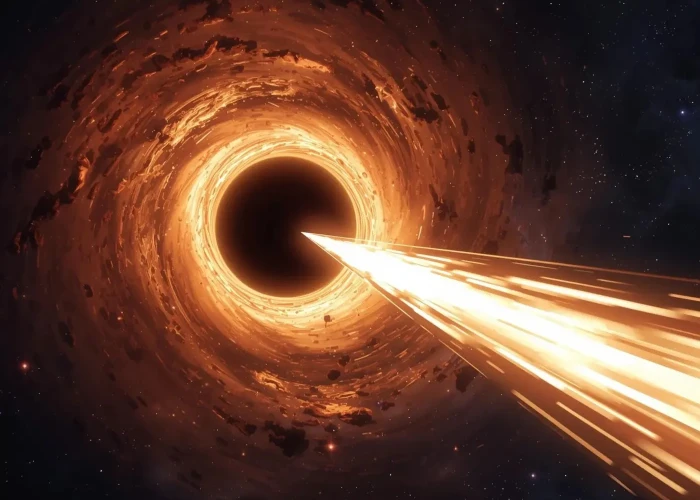
A supermassive black hole at the centre of an active galactic nucleus in our cosmic “neighborhood” is growing at an exceptionally rapid rate while producing a radio outburst unlike anything previously observed.
More
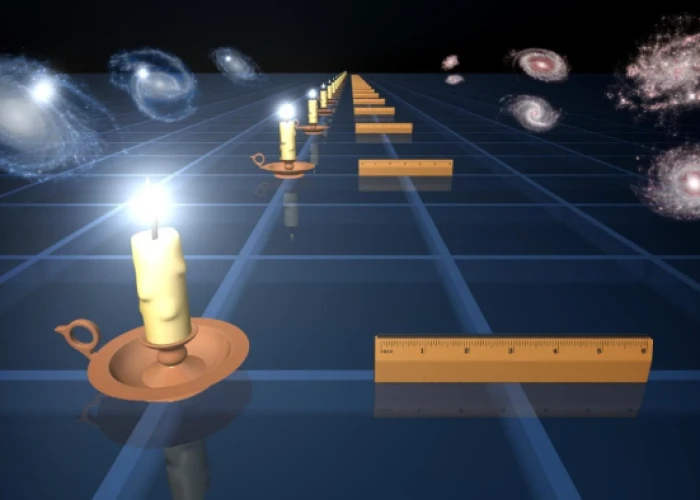
Quasars as cosmic rulers
2026. june 29.
A classical cosmological test has been revisited using a much larger dataset to probe the geometry of the Universe.
More
Mauve Satellite Launched — A New Window Opens onto Stellar Activity and Habitable Worlds
2025. november 29.
The Mauve small satellite has been recently successfully launched and will study the activity of stars across the Milky Way. Hungarian space-industry partners played a key role in building the spacecraft, while Hungarian astronomers will be deeply involve
More
What’s up in radio? — The first detection of a coronal mass ejection from Another Star
2025. november 17.
Researchers have for the first time identified possible radio signatures of a coronal mass ejection (CME) originating from another star with the LOFAR array, helping us to understand the interaction between stellar activity and exoplanetary environments.
More
A Hungarian-led Team of Astronomers Discover Rare Gas-Rich Debris Disks Around Young Stars
2025. october 27.
An international team of astronomers, led by researchers at the Konkoly Observatory of the HUN-REN Research Centre for Astronomy and Earth Sciences, has announced the discovery of carbon monoxide (CO) gas in five debris disks...
More
- 1.
- 2.
News breakdown
- Science
- Archive
- Public Outreach
- Research News
- Organisational News
- Proposal
- Event
- Conferences and events
- Celestial Event
- Press Release
- All news